How stress affects the immune system
Stress is a powerful trigger for autoimmune diseases – conditions where the immune system mistakenly attacks the body’s own tissues. When stress hormones take over, the body activates the hypothalamic-pituitary-adrenal (HPA) axis…
Nutritional Therapist for Autoimmune Disease and stress in Surrey & London – Ann Shaw
Cortisol, known as the ‘stress hormone,’ is released during stressful periods. When stress becomes long-term, the adrenal glands are over-stimulated, which can throw the body’s systems, including the immune response, out of balance.
When stress becomes chronic (lasting weeks, months, or even years), it can change how your immune system works. This will increase inflammation, and usually cortisol helps control inflammation. But with constant stress, your body stops responding to cortisol properly, allowing inflammation to spiral out of control.
Stress can affect your gut in harmful ways:
The gut-immune connection:
- Leaky gut: Stress can weaken the lining of your intestines, creating tiny gaps that allow bacteria, toxins, and undigested food particles to leak into the bloodstream. This is also known as increased intestinal permeability. The absorption of minerals can also be impaired through stress.
- Immune over-reaction: When these foreign substances enter the bloodstream, the immune system goes on high alert, leading to chronic inflammation and potentially triggering autoimmune responses.
Chronic stress can lead to habits like poor diet, lack of sleep, lack of exercise, drinking too much alcohol and smoking – all of which can weaken the immune system. Studies show that up to 80% of people report experiencing major emotional stress before developing an autoimmune disease. Environment triggers can also play a role such as toxins and infections.
Infections, bacterial or other, can be a trigger for autoimmune disease. It is important to test for and address any infections. This could be bacterial or viral such as Epstein-Barr Virus, mycotoxin-related, Lyme disease or mould illness.
One client recently shared:
“I had my thyroid tested again at the doctor’s, and still no need to go back on the medication. She said to continue as I am.”
This reflects what I often see with clients managing thyroid conditions like Hashimoto’s. With the right mineral and nutrient support, many are able to avoid or reduce dependency on medication.
I often have people diagnosed with Hypothyroid, Hashimotos thyroid conditions who are keen to avoid medication in which case hormonal imbalances and mineral imbalances need exploring.
Thyroid disorders are fairly common (American Thyroid Association, 2020):
- More than 12% of the US population will develop a thyroid condition during their lifetime
Common causes of thyroid disorders are iodine deficiencies and nutrient deficiencies – I cannot stress the importance of correct supplementation.
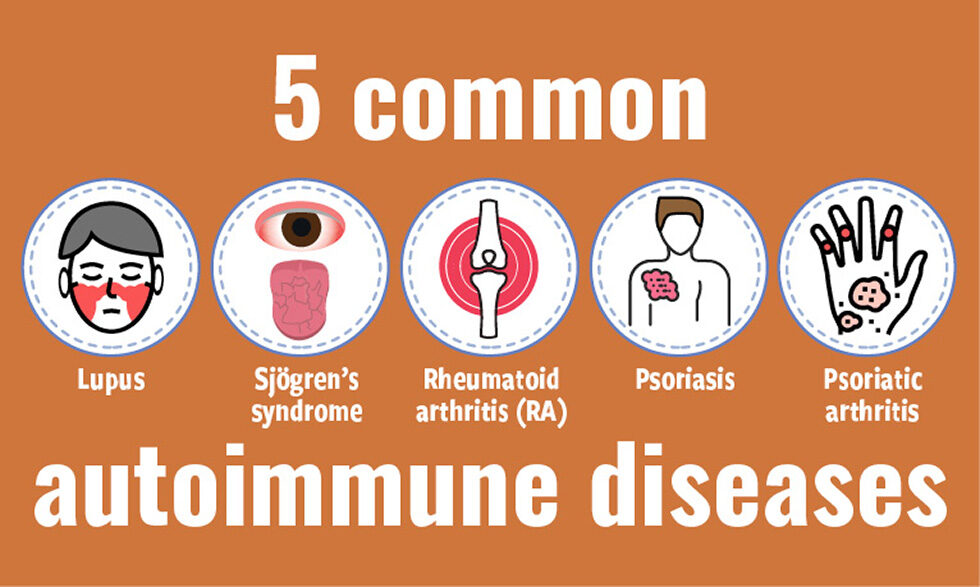
Most Common Autoimmune Diseases:
- RHEUMATOID ARTHRITIS (RA)
SYSTEM LUPUS ERYTHEMATOSUS (SLE)
MULTIPLE SCLEROSIS (MS)
COELIAC DISEASE
INFLAMMATORY BOWEL DISEASE
CROHN’S & ULCERATIVE COLITIS
HASHIMOTO’S THYROIDITIS
PERNICIOUS ANAEMIA (B12 DEFICIENCY)
SJOGREN’S SYNDROME
VITILIGO
PSORIASIS
TYPE 1 DIABETES
ANKYLOSING SPONDYLITIS
ALOPECIA
The connection between chronic stress and autoimmune disease is undeniable. By addressing underlying stress, supporting gut health, identifying infections, and restoring mineral balance, it IS possible to reduce inflammation and support the immune system more naturally. If you are navigating an autoimmune condition, consider a holistic approach that looks at the full picture – not just the symptoms. Healing is possible, and you don’t have to do it alone.
If you are struggling with ongoing symptoms of autoimmune disease, and want to understand what is really causing your symptoms, I offer a free discovery call where we can explore what may be driving your autoimmune condition and how to move forward.
The Ann Shaw Clinic of Nutritional Medicine has a programme-based approach which integrates nutrition, functional laboratory testing if necessary, and lifestyle guidance, to address autoimmune disease. Find out more here
I work with clients suffering autoimmune disease in Surbiton, Esher, Wimbledon and across Surrey & London, as well as online consultations across the UK.
This article is for general information and is not intended to diagnose, treat or replace medical advice. If you have symptoms that concern you, please speak with your GP or another appropriate healthcare professional.
(c) Ann Shaw Clinic of Nutritional Medicine 2025